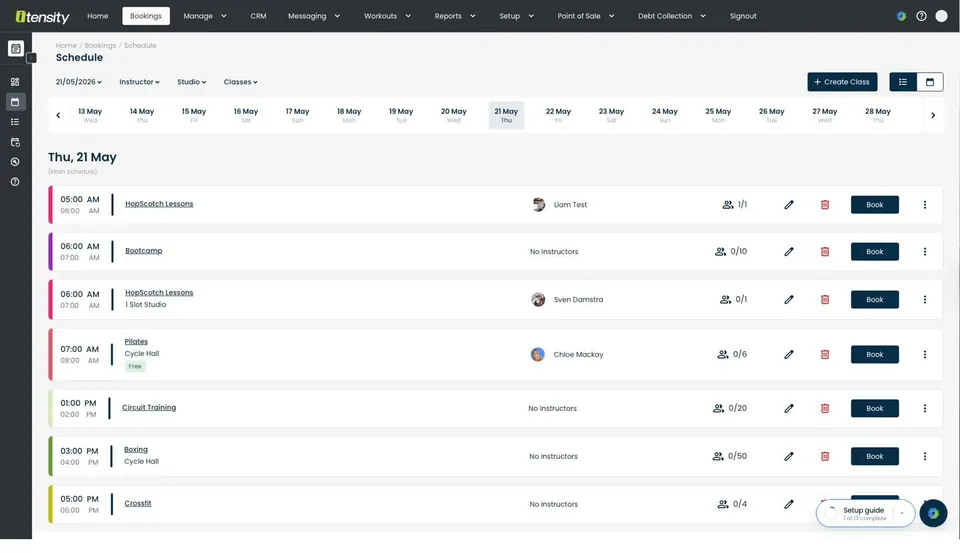

Recurring Bookings: How to Turn a Scheduling Feature Into a Growth Engine
Most gyms treat bookings as admin. Used properly, recurring bookings are a retention tool, a revenue line, and an operations fix — all at once. Here’s how to actually use them.
Most gyms treat bookings as admin. A member wants a spot, they book a spot, your team processes it. Done. That is a missed opportunity.
Recurring bookings let a member lock the same slot, every week, automatically. No rebooking. No lost spots. On the surface that sounds like a convenience feature. Used properly, it is a retention tool, a revenue line, and an operations fix all at once.
This guide breaks down how to actually use it — what works for big corporate clubs, what works for boutique studios, and how to blend recurring bookings into your normal schedule without breaking it.
Why this matters more than it looks
Retention is where the money is. The research is blunt: improving membership retention by even five percent can lift profits by twenty to thirty percent, because you stop burning your budget replacing members who left.
A small retention gain, a big profit gain
Why holding onto members beats constantly replacing them
+5% retention
small effort
Profit impact
+20–30%
And members leave early. The first three classes are where a new joiner silently decides whether your club fits their life. If their routine never locks in, they drift. A booked, repeating slot is one of the simplest ways to build that routine for them.
Recurring bookings is not really about saving clicks. It is about building habit, protecting your best members, and creating predictable revenue.
Two different playbooks
The same feature gets used very differently depending on your model. Do not copy the boutique playbook into a big club, or the other way around — they solve different problems.
Corporate & multi-club
Space and volume. Your problem isn’t scarcity — it’s structure across a large, busy floor.
Corporate & school contracts on a fixed day and time — set once, owned for the term.
Structured programmes — rehab blocks, post-natal courses, beginner series that close automatically.
High-demand classes — give loyal regulars certainty in the one or two slots that always fill.
Boutique studios
Small space, small classes, demand that outstrips supply. This is where it’s most powerful.
Standing class slots — the 6am spin crowd, the Tuesday/Thursday Pilates regulars.
The instructor relationship — members stay for people; protect that slot.
Community — the same faces, same slot, every week. Friendships keep members.
High-demand classes fill with the same faces — lock them in.
The marketing angle: sell the slot
Here is the shift in thinking. A guaranteed weekly slot is worth paying for. Most gyms give away the most valuable thing they have — certainty of access to a scarce, popular class — for free. You don’t have to.
Let members pay a small monthly amount to lock their place in your most popular classes or with your busiest trainers. Frame it as access insurance: “Never lose your spot.” Two rules keep it clean:
Rule 1 — Only sell it where demand is real
Charging extra for a guaranteed spot in a half-empty Tuesday afternoon class makes no sense, and members know it. This is a tool for your full classes only.
Rule 2 — Sell it as a new layer, not a clawback
Don’t put your existing loyal regulars behind a paywall they never had before. Offer it on new slots and to new members. Taking away something that used to be free breeds resentment fast.
Use challenges and limited-time offers
Run an eight-week challenge — a transformation block, a strength cycle, a beginner intro course. Everyone who signs up gets pre-booked into the same slot for the full eight weeks, then the booking ends automatically. Why it works: urgency sells, commitment drives results, you can charge a premium for a structured outcome, and there’s a clean exit because the booking has a hard end date.
The operations angle: less admin, fewer mistakes
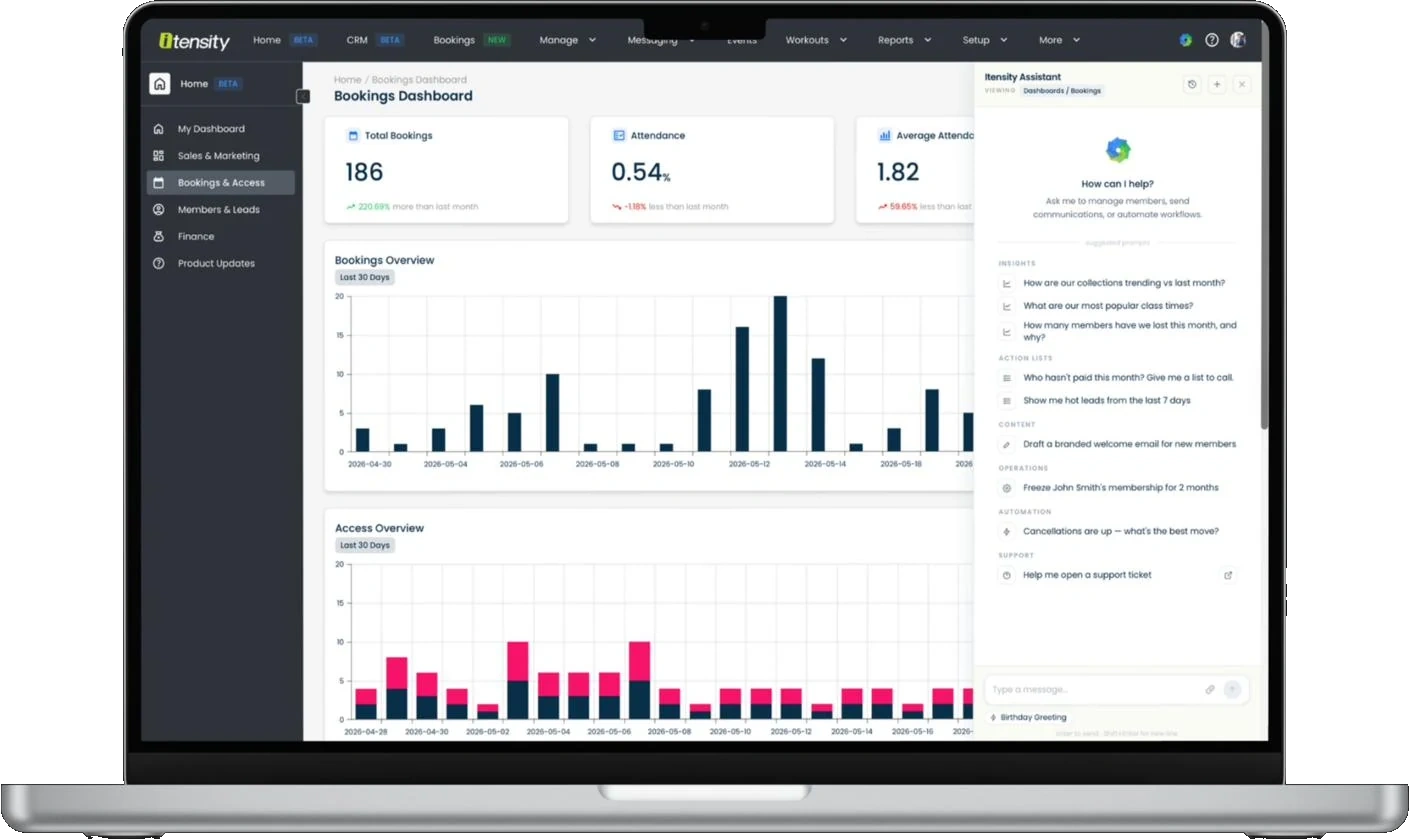
Manual rebooking is one of the biggest hidden time sinks in a busy studio. Recurring bookings removes that loop for your most predictable members: your team stops chasing rebooks, you field fewer “I lost my spot” complaints, and a good setup shows you what’s active, what’s ending soon, and what needs attention — so you act before a lapse becomes a churned member.
For rental & hybrid operators
If instructors rent slots but you manage bookings, keeping that booking layer in-house means you keep visibility of who’s in your building, protect your capacity, and hold the member relationship and data — instead of fragmenting it across individual trainers. That’s worth a lot when a renter leaves and you want to keep their clients.
Personal training: the one-on-one case
Recurring bookings is almost made for PT. Same client, same trainer, same time each week — exactly the pattern it handles. No weekly rebooking dance, no double-booking, protected income for the trainer, and clean blocks for packages: sell ten sessions over ten weeks, pre-book the full set into a fixed slot with an end date, and the block closes itself when it’s done.
In boutique fitness, the standing slot is the relationship.
How to blend recurring and normal bookings
This is the part most people get wrong. Recurring bookings is not meant to replace your normal booking system — it sits inside it. Use recurring for the predictable core, and normal bookings for everything flexible around it.
The single most important rule: do not let recurring bookings swallow an entire class. If you reserve twelve of fifteen Pilates beds as standing slots, only three are left for everyone else — and your trial joiners get shut out of your best classes. A sensible ceiling is around 30–40% of a class held as recurring.
Cap the reserved portion of each class
Leave room for casual members and trials — or you quietly kill new-member conversion
Healthy mix
~35% recurring65% open to all
Too locked
80% recurring — new members can’t get in
Every recurring slot you sell is a slot removed from open availability. That’s the point — but it changes how much room you have for new members to try you out. The payoff is stability: a base of committed, repeating bookings is far steadier than leaning on once-off sales.
Recurring revenue is business stability
Booked, repeating slots smooth out the peaks and troughs of once-off sales
Once-off only — volatileWith recurring — steady & rising
A practical rollout plan
Do not flip this on across your whole timetable at once. Pilot it.
Pick your highest-demand classes or trainers — the ones that always fill. That’s where scarcity makes recurring bookings valuable.
Decide your cap — set the percentage of each class you’ll hold as recurring before you start.
Choose your first commercial play — a paid “fixed spot” add-on, or an eight-week challenge with pre-booked slots. Run one, learn from it.
Set up your team’s access — make sure the right staff roles can view and manage recurring bookings before you go live.
Measure — track whether your reserved-slot members show up more, stay longer, and renew. That’s the number that tells you it’s working.
The bottom line
Recurring bookings looks like a scheduling convenience. It is actually three tools in one: a retention tool, because a held slot builds the habit that keeps members from drifting; a revenue tool, because a guaranteed spot in a full class is worth paying for; and an operations tool, because it removes the weekly rebooking grind.
Use it where demand is real. Cap it so it never locks new members out. Blend it into your normal schedule instead of replacing it. Do that, and a quiet booking feature becomes one of the most practical growth levers in your club.
See recurring bookings in Itensity
Standing slots, challenge intakes, PT blocks and capacity caps — all managed from one place.
A practical framework for gym owners in South Africa, the UK and Ireland to use dashboards and analytics to improve revenue, retention and cash flow.
S
Running a gym in South Africa, the UK or Ireland has never been more competitive. Costs are rising, member expectations are increasing, and retention is harder than ever. Yet many gym owners still rely on instinct instead of insight.
Track trends, not noise — the Itensity dashboard
Stop Managing on Noise
Every gym experiences “noise”, three members complain in one week, one cancellation feels personal, a negative review feels alarming. But isolated incidents are not strategy indicators. Trends are. Modern gym dashboard software allows you to track sales vs cancellations, cancellation reasons, membership growth trends, and revenue vs member count.
Leads Predict Sales
If you are serious about growing your fitness business, you must track leads. Leads are a precursor to revenue. When lead flow increases, sales usually follow. When lead flow drops, revenue slows 30–60 days later. Monitor lead sources, conversion rates, sales per consultant, and campaign performance.
Attendance Predicts Retention
One of the most powerful metrics is attendance. Inactive members cancel quietly. Active members stay longer. Your gym attendance tracking system should show monthly attendance trends, seasonal dips, peak vs off-peak usage, and engagement across age brackets.
Revenue Matters More Than Member Count
A gym with 1,000 members is not automatically healthier than one with 600. What matters is revenue per package, recurring revenue ratio, and invoice vs collection performance. Many gym owners discover their most popular package is not their most profitable.
Recurring Revenue Is Business Stability
Focus on recurring revenue to reduce risk. Gyms relying heavily on once-off sales, cash payments, and manual EFT transfers are more vulnerable during slow seasons. Healthy gyms prioritise debit orders, direct debits, automated card payments, and online payment links.
Itensity Starter: The Smart, Affordable Way to Run Your Gym
Not every gym needs enterprise software. Itensity Starter was designed for smaller gyms, boutique studios, and CrossFit boxes that want to operate professionally at R600/month.
P
Running a gym today means juggling member bookings, class schedules, attendance tracking, and client communication all while trying to grow your business and keep costs low. For many small studios, that balance has always been a challenge until now.
Run a lean, modern gym without the overhead
Built for Small Studios with Big Goals
Itensity Starter was designed specifically for smaller gyms, boutique studios, CrossFit boxes, and personal training facilities that want to operate professionally without unnecessary complexity or cost. With plans starting at only R600 per month, Starter gives you class bookings and schedules, attendance tracking, CRM and lead management, and Vitality Fitness integration.
The Most Affordable Way to Get Vitality Fitness
If you have been waiting to join the Discovery Vitality Fitness Network, Itensity Starter is your simplest and most cost-effective path. Connect your gym to Discovery and manage member check-ins directly through Itensity.
A White-Label App for Your Members
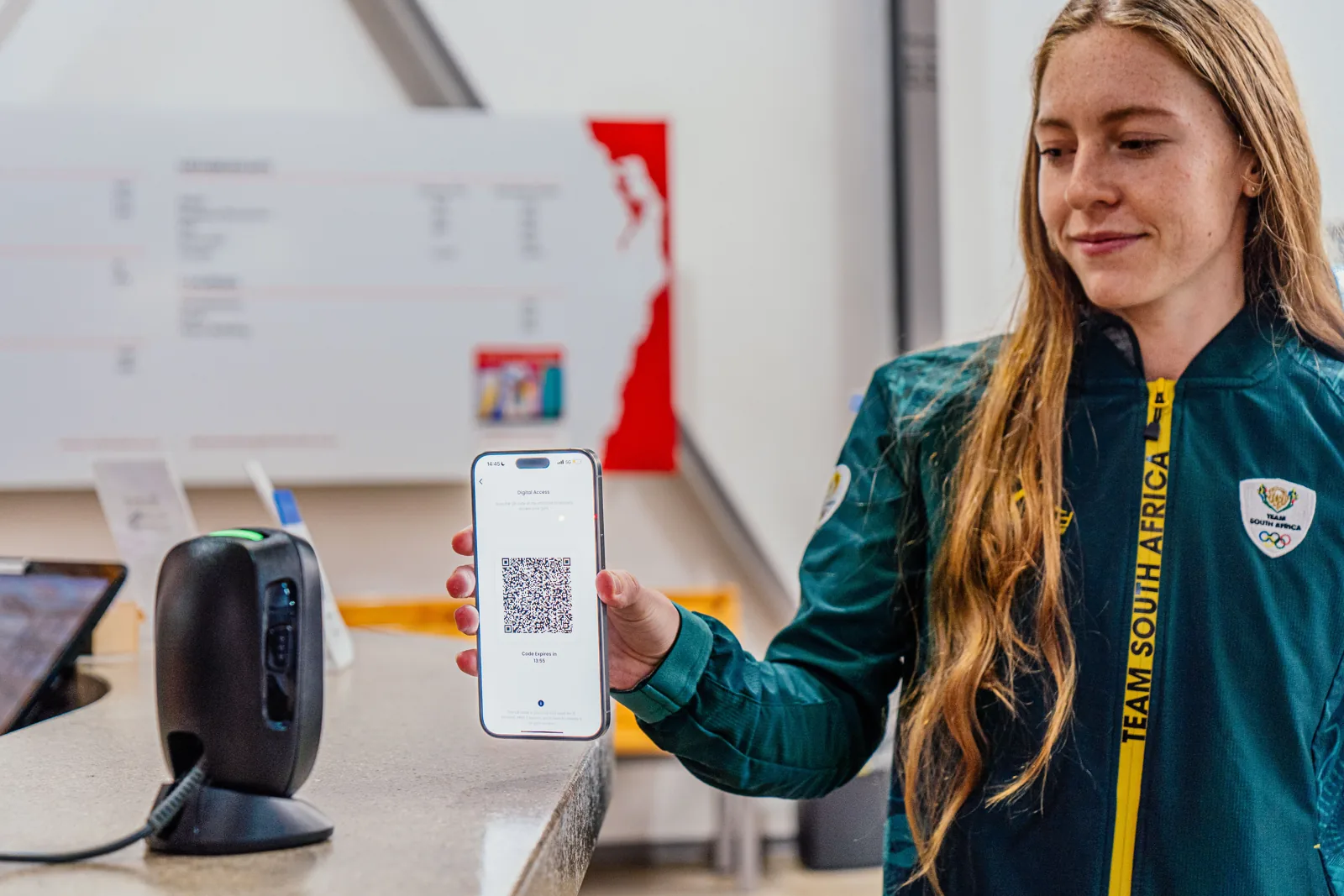
Starter includes access to the Itensity member app branded to your facility. Members can view schedules, book classes, and check in via QR code. Your gym looks professional from day one.
South Africa’s fitness industry has grown rapidly. We explore the top 7 gym franchises, how they started, and what makes them successful.
I
South Africa’s fitness industry has grown rapidly over the past two decades. From high-end wellness clubs to affordable functional gyms and smart boutique studios, the local market features a mix of national chains and specialised offerings.
South African clubs scaling on one platform
1. Virgin Active
Founded in 1999 after acquiring Health and Racquet Club assets. With 130+ clubs nationwide, it remains the dominant force in the premium segment.
2. Planet Fitness
Founded in 1995 with a lifestyle-focused offering. Expanded to include JustGym for budget-conscious users. Over 50 clubs across the country.
3. Body20
Founded in 2013, bringing Electro Muscle Stimulation (EMS) to South Africa. Positioned for busy professionals wanting efficient 20-minute workouts.
4. CrossFit Affiliates
The CrossFit model has spread rapidly across South Africa, with independently owned affiliates building strong communities through functional fitness.
How Itensity Supports These Gyms
Whether you run a franchise or an independent facility. Itensity provides the operational backbone membership management, billing, bookings, access control, CRM, and a white-label member app.
How to Empower Your Staff and Members at the Frontline
The most effective gyms don’t rely on back-office heroics they empower their people at the point of contact.
O
The most effective gyms don’t rely on back-office heroics they empower their people at the point of contact. At GrowthFit, Jaco van der Merwe shared a powerful principle: ownership.
Empower the front desk with self-service check-in
The 80/20 Rule of Operational Success
“If you can deal with 80% of inquiries at the front desk, you’re winning.” Every layer a task passes through adds cost, time, and complexity. By empowering the first point of contact, you eliminate bottlenecks before they start.
Strategies to Empower Staff
Automate routine tasks sign-ups, payments, and member verifications should happen via smart workflows. Equip staff with tools designed for speed and clarity. Train for resolution, not delegation.
Let Members Help Themselves
Members prefer private, fast solutions. Self-service payment links, in-app payments, and automated booking confirmations reduce friction and improve the member experience.
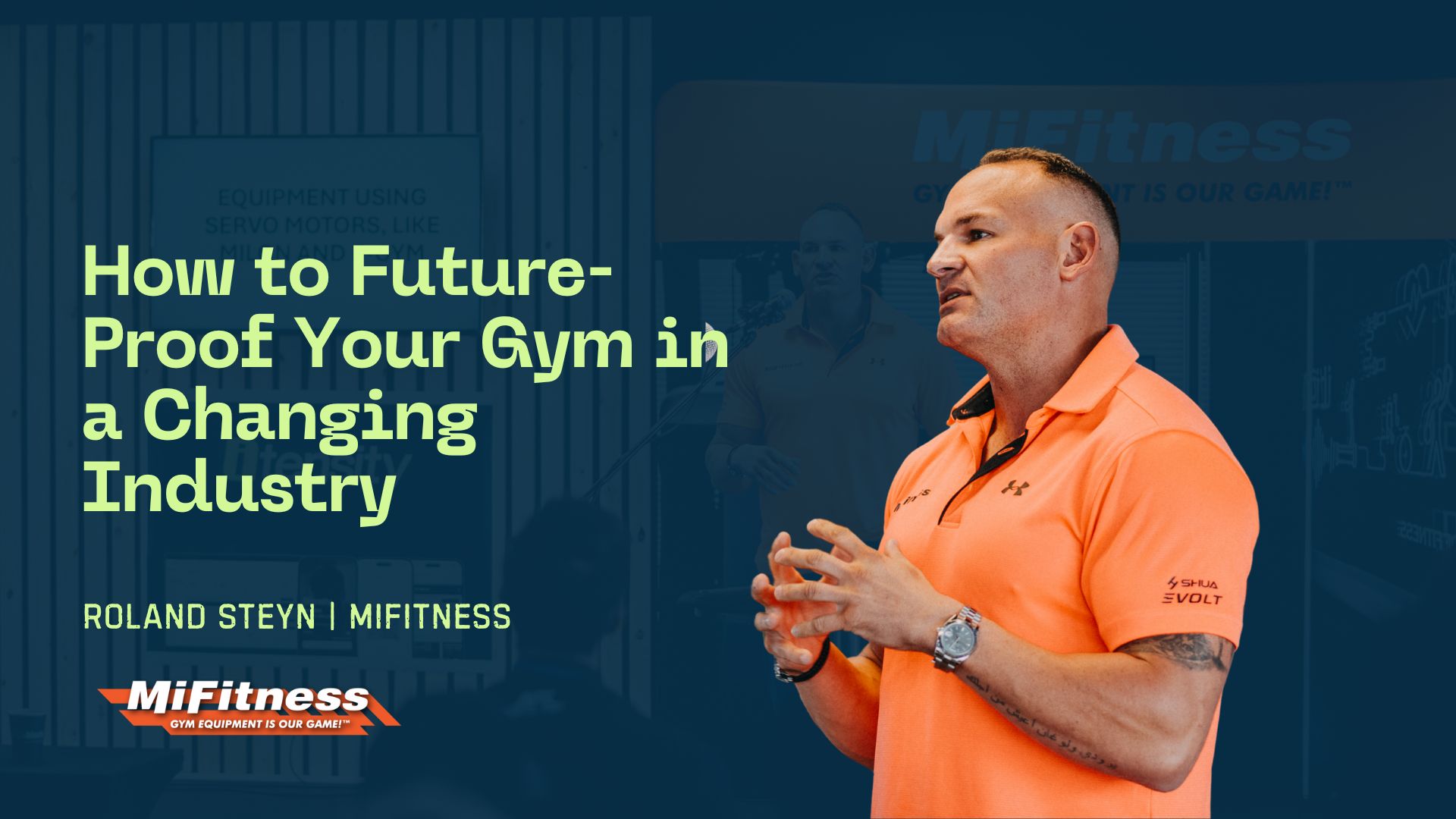
How to Future-Proof Your Gym in a Changing Industry
Six game-changing strategies from Roland Steyn’s GrowthFit talk to future-proof your gym — must-read insights for South African gym owners.
In a market where independent gyms battle medical aid subsidies, shifting trends, and changing consumer behaviour, Roland Steyn’s GrowthFit talk delivered a wake-up call. With insights from global fitness expos, partnerships with 5,000-location chains, and experience launching gyms across South Africa and the Middle East, Roland outlined how South African gym owners can survive — and thrive — by evolving faster than the competition.
Here’s what you should be doing right now.
1. Embrace the high-value, low-price model — but strategically
Roland explained that South African gyms must adapt to a market where the average consumer expects memberships between R200–R500/month, thanks to medical aid subsidies. The key? Offer undeniable value at this price point, while introducing paid-for extras like saunas, HYROX training, and recovery services.
“You can’t compete with a subsidised membership on price alone. You must out-deliver on experience.”
2. Invest in adaptive equipment, not just what’s familiar
Plate-loaded machines are trending globally, especially adaptive models that support natural movement and biomechanics. Steyn emphasised that this type of equipment — though often overlooked — is what retains serious members and keeps your gym relevant.
“Don’t wait for members to ask for adaptive machines — once they try them, they stay.”
Members stay where the experience — equipment, recovery and community — keeps getting better.
3. Rethink recovery as a must-have, not a luxury
From infrared saunas to ice showers and red light therapy, recovery is now a core expectation. Roland urged gym owners to install even small-scale recovery features and charge nominal fees as value-adds.
“You’re not just competing with other gyms. You’re competing with how your members want to feel.”
4. Build private, women-focused zones
Women’s wellness is exploding. Roland spoke about dedicated strength zones and women-only floors featuring premium dumbbells and selectors. These aren’t gimmicks — they solve a real comfort barrier and increase member retention.
“Women want privacy when they train. Give it to them — or lose them.”
5. Stop undervaluing body-composition data
Traditional scales and BMI are outdated. Tools like Evolt not only provide muscle-mass tracking per body part, but also generate supplement plans, enabling upsell opportunities and deeper member engagement.
“If you’re not measuring progress, your members are training blind.”
6. Focus on sustainable, not flashy, growth
Roland introduced the concept of “elephants vs unicorns.” Elephants represent slow, community-based fitness businesses with thick skin and sustainable growth. Unicorns rise fast — but crash faster.
“This isn’t a sprint. It’s sustainable momentum that wins.”
The takeaway for gym owners
The South African fitness landscape is tough — but also full of opportunity. Your ability to differentiate, adapt globally-relevant ideas, and obsess over experience will define your success. This isn’t about keeping up with trends — it’s about being ahead of them.
Missed payments are costing gyms more than they realise. Candice Sergeant from Netcash unpacks the reality at GrowthFit.
F
In a gym business, energy is usually focused on programming, member experience, and retention. But what quietly determines success or struggle is payment collection. Despite packed classes, many gyms grapple with erratic cash flow.
See collections vs invoices at a glance
Why Debit Orders Matter
Debit orders are the financial backbone of most gyms. 96% of gyms rely on them for consistency and reliability. However, the fitness industry has a 13% unpaid rate nearly triple the national average. Even with 300 members, you’re potentially losing payments from nearly 40 every month.
The Real Cost
Failed payments compound. A R500 missed payment isn’t just R500 lost it’s the admin time to chase it, the access control logic to enforce it, and the potential member loss when frustration builds on both sides.
The Solution: Automation
Smart arrears recovery workflows automated SMS at 24 hours, payment links at 48 hours, and debt agent assignment at 7 days recover revenue without manual intervention.
How Fitness Principles Can Supercharge Your Gym Membership Sales
The discipline of fitness can transform how gyms approach sales. Four foundational principles that drive serious membership gains.
S
In the fitness world, success isn’t instant it’s built on systems, consistency, and focus. Ironically, these same principles are often overlooked when it comes to selling gym memberships.
Turn interest into signed, recurring members
1. Focus on Leading Indicators
In fitness, leading indicators include step counts, food tracking, and completed workouts. Sales is no different. The smart gym owners obsess over daily follow-ups, outbound messages, consultation bookings, and trial activations.
2. Consistency Beats Intensity
One intense workout won’t build a six-pack. Similarly, one social media post won’t fill your classes. The most successful gyms build momentum through consistent messaging, daily prospecting, and structured sales processes.
3. Measure What Matters
Track conversion rates at every stage of your pipeline. Where are leads dropping off? Which marketing channels actually convert? Your CRM should answer these questions automatically.
4. Recover and Adapt
Bad months happen. The difference is how quickly you identify the cause and adjust. Data-driven gym owners spot trends before they become crises.
Sandra McClurg of CrossFit Relentless Heart explains how Itensity transformed her operations and gave her hours back every week.
C
As a gym owner, every minute counts. Sandra McClurg, affiliate owner of CrossFit Relentless Heart, knows this struggle. When she started looking for better software, she needed a system that didn’t just work but worked smarter.
A calmer back office means more time on the floor
The Challenge: Too Much Admin
“As a small business owner, you’re the cleaner, you’re the admin person, you’re the head coach you’re all the things. Those extra hours count, and doing double work at month-end just wasn’t working out for me.”
The Switch to Itensity
Sandra found Itensity through the Discovery Vitality Fitness network. What started as a Vitality integration quickly became a full operational platform billing, bookings, member management, and the white-label app.
The Result
“Itensity just works. The debit orders run, the bookings run, the app works. I can actually spend my time coaching instead of doing admin.” Sandra’s members also responded positively to the app, with self-service bookings and payments reducing front-desk workload significantly.
Find Your Flow with the Itensity Yoga Playlist on Spotify
We curated a yoga playlist on Spotify to help your members find their flow. Perfect for studios running yoga and mindfulness classes.
C
Music sets the tone for every class. Whether your members are flowing through sun salutations or holding a deep stretch, the right soundtrack makes all the difference.
Set the mood for every flow
Why We Made This
We wanted to give Itensity studios something extra a curated playlist that matches the energy of a great yoga session. Calm, focused, and grounding.
How to Use It
Share the playlist link with your instructors, add it to your studio’s Spotify, or feature it in your member app communications. It’s a small touch that elevates the member experience.